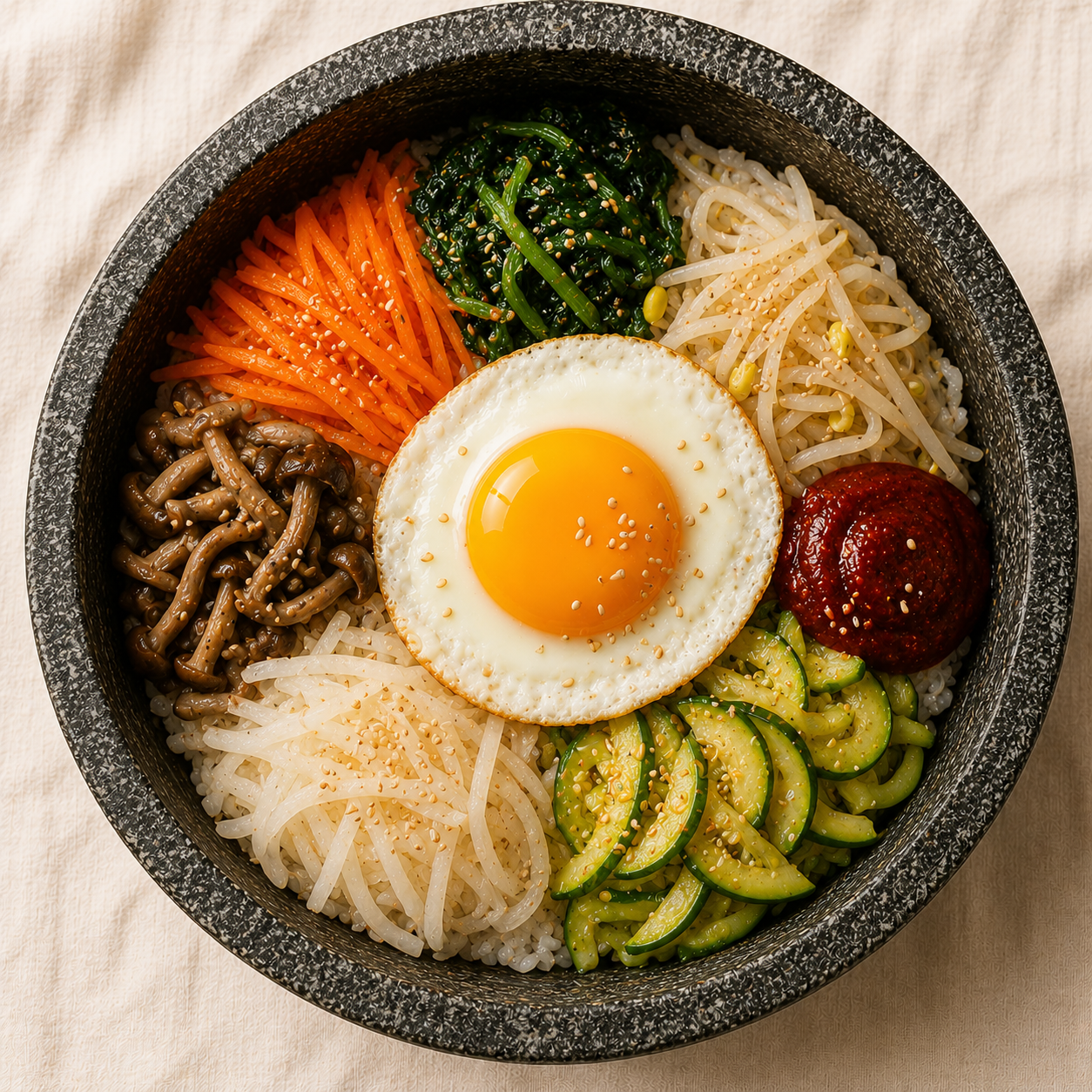
Bibimbap / Bi Bim Bap (비빔밥)
Bibimbap.
Mrs. Bae's hack: don't sauté each vegetable. Steam them all together. The stock you steam them in becomes a doenjang side-stew.
Bibimbap usually takes an hour because you sauté six vegetables separately, in six pans. Mrs. Bae has cooked Korean food for 30 years and stopped doing that years ago. Her hack: steam them all together for exactly 3 minutes. The stock you steam them in becomes a side bowl of doenjang-jjigae. Two dinners, one pot.
The whole point of bibimbap is the freshness — vegetables with snap, rice still warm, gochujang hot enough to wake you up. Don't overcook the veg.
Ingredients
The 6 vegetables (any combination — clean out your fridge)
- Carrot, julienned
- Korean zucchini (애호박), julienned — leave the seedy center for stew
- Korean radish (무), julienned
- Spinach, halved
- King oyster or shimeji mushrooms, torn
- Bean sprouts (콩나물), root ends trimmed
The base
- 2 cups cooked rice (warm)
- 1L anchovy stock (멸치육수) — for the steamer
- Pinch of salt for the vegetables
The bibimbap topping
- 1 big spoon gochujang (Korean chili paste)
- 1 splash sesame oil
- 1 generous sprinkle toasted sesame seeds
- 1 fried egg per bowl
Optional
- 100g ground beef, sautéed and finely minced
Method
- Prep the veg. Julienne everything to similar 5–6cm matchsticks. Halve the spinach. Tear the mushrooms. The whole point is uniform thickness so they steam evenly.
- Set up the steamer. Pour 1L anchovy stock in the base. Bring to a rolling boil. Place a steaming basket on top, lay vegetables in. Sprinkle a pinch of salt over them.
- Steam exactly 3 minutes. Not longer — the bean sprouts should still snap when you bite them. Pull the basket off.
- Bonus stew with the leftover stock. Add 1 spoon doenjang to the stock left in the pot. Drop in tofu cubes, the seedy zucchini cores, spring onion, and chili. Simmer while you assemble the bowls.
- Build the bowl. Warm rice in the bottom, vegetables arranged in arcs on top, fried egg in the center, gochujang spoon on the side.
- Finish. Drizzle sesame oil, sprinkle sesame seeds. Bring to the table with the gochujang on top so the eater can adjust their own heat.
Tip · why steaming beats sautéing
Sautéing each vegetable separately concentrates oil and salt. Steaming brings out the vegetable's own sweetness and you don't end up with six greasy pans to wash. Mrs. Bae says 30 years of bibimbap taught her this.
Tip · the bean sprout test
Bite a bean sprout after the 3-minute steam. If it still smells raw (콩 비린내), give it 30 more seconds. If it doesn't, you're done. That's the only timer that matters.
Tip · two dinners, one pot
The anchovy stock you steam the veg in absorbs everything they release. Don't pour it out — turn it into a doenjang side-stew with whatever's left. This is the real Korean home-cook move.