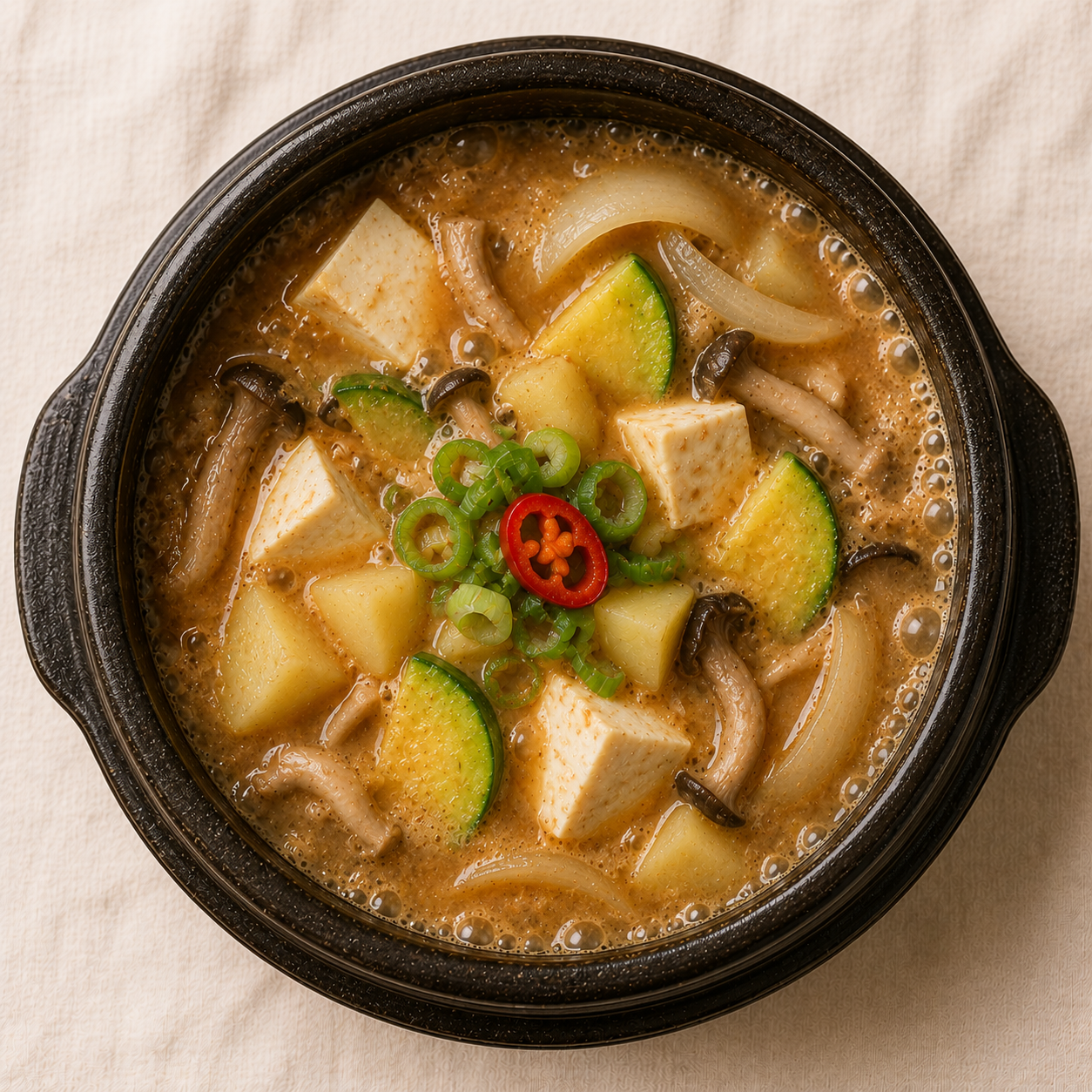
Doenjang-jjigae / Soybean Paste Stew (된장찌개)
Doenjang-jjigae.
Bloom the paste in oil before adding water. That's the move that takes doenjang-jjigae from murky to deep.
Doenjang-jjigae is the everyday Korean stew — the one that lives in every household and tastes different in every kitchen. The variable is the paste itself, but the method matters too. The chef's two moves: bloom the paste in oil first (don't burn it), and add the hard vegetables before the soft ones.
Two spoons doenjang. Half a spoon gochujang. The numbers don't change.
Ingredients
The paste base
- 2 tbsp doenjang (Korean fermented soybean paste)
- ½ tbsp gochujang
- 1 tbsp neutral oil
The hard vegetables (in first)
- 1 small potato, cubed
- 100g Korean radish (무), cubed — optional
- 300ml water (or anchovy stock)
The soft vegetables (in second)
- 1 small Korean zucchini (애호박), cubed
- ½ onion, cubed
- Handful of mushrooms (any kind), torn
- ½ block tofu (~150g), cubed
- 1 tsp minced garlic
- ½ tsp gochugaru
Finish
- 1 stalk daepa, sliced
- 1 cheongyang chili, sliced — optional
Method
- Bloom the paste. In a pot, heat oil over low heat. Add doenjang and gochujang. Stir gently 1 minute — don't let it brown. This is what takes the stew from murky to round.
- Add water + hard vegetables. Pour in 300ml water. Add potato and radish. Bring to a boil. Simmer 7 minutes.
- Add the soft vegetables. Add zucchini, onion, mushrooms, tofu, garlic, and gochugaru. Simmer 5 more minutes.
- Finish. Add daepa and chili. 1 more minute. The vegetables should be soft but not falling apart.
- Serve in the pot. With rice and a fresh banchan or two.
Tip · don't burn the paste
Doenjang burns easily — and burnt doenjang is bitter for the rest of the cook. Keep the heat low when blooming, stir constantly, and pour the water in the moment the paste turns fragrant.
Tip · hard before soft
Potato and radish need 7+ minutes to soften. Zucchini and tofu need 3–5. Adding everything at once = mush of one + crunch of the other. Stagger them.
Tip · which doenjang
If you can find a true Korean farmhouse doenjang at Yumi Hana (look for 재래식 or 전통 된장), use it — it's earthier. The supermarket-style 청정원 / 해찬들 jars are smoother and more crowd-pleasing. Both work; pick by mood.