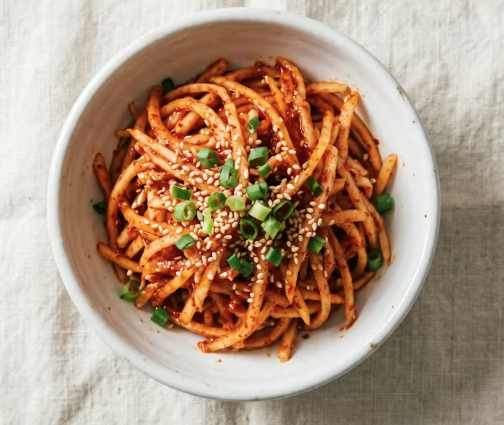
Musaengchae / Mu Saengchae (무생채)
Musaengchae.
Remember
1
Migros radish (≈300g)
·
2
tbsp salt to wilt
·
2 + pairs
tbsp gochugaru
Taste as you go.
A recipe from Yoon Ju mo - Culinary Class Wars Season 2 chef. The exact measurement depends largely on the radish and your taste preference.
Pick firm radish. One whole radish from Migros is about right (≈300g).
Ingredients
The base
- 1 Korean radish from Migros (≈300g)
- 2 tbsp coarse salt (for wilting)
The color
- 2 tbsp gochugaru (Korean red pepper flakes — adjust to spice tolerance)
The 3 pairs — season to taste
- 2 fish: 1 tsp saeujeot (Korean salted shrimp) + 1 tbsp myeolchi-aekjeot (Korean anchovy fish sauce), optional
- 2 aromatic: 1 tbsp minced garlic + ½ tsp minced ginger
- 2 sweet: 1 tsp sugar + 1 tbsp maesil-cheong (Korean plum syrup or other sweetener)
Finishing
- 1 tbsp rice vinegar
- 1 tbsp toasted sesame seeds
- 2 stalks spring onion (Korean green onion) — green parts only, finely chopped
- Extra gochugaru for color, optional
Method
- Peel the radish. Cut into thin matchsticks vertically.
- Salt and wait. Toss radish with 2 tbsp salt in a bowl. Let it sit 15 minutes. The radish will weep — that's the point.
- Drain — don't rinse. Squeeze gently with your hands to release the salty liquid. Skip the rinse; the residual salt is part of the seasoning.
- Color first. Toss with 2 tbsp gochugaru until every strand is coated red. This is the base layer.
- Add the 3 pairs. Saeujeot + anchovy sauce. Garlic + ginger. Sugar + maesil. Then vinegar, sesame, chopped spring onions.
- Mix with your hands. Gently — you want to coat, not crush. Taste. Adjust salt, sweet, sour until it’s just right.
- Optional color pass. If it looks pale, dust in more gochugaru and toss once more.
- Rest 10 minutes before serving. The flavors marry. Better the next day.
Tip · sonmat means taste-as-you-go
Yoon Ju-mo's video has no measurements for the seasonings — only "a pinch of this, some of that." The pairs above are starting points. After mixing, taste it. Adjust. That's the whole skill of banchan.
Tip · better the next day
Musaengchae improves in the fridge. The radish keeps releasing water and absorbing the seasoning back. Make it the night before; eat it for three days.